TL;DR
Choose commercial cleaning in Turlock by defining scope zone by zone, setting frequency based on foot traffic, and requiring written checklists, a named contact and regular inspections. Insist on an on-site walkthrough before any quote, since scope differences, not totals, explain most price gaps between providers.
Key takeaways
- Divide your building into five zones and assign routine and periodic tasks to each.
- Match visit frequency to foot traffic, with restrooms and entries getting the most attention.
- Require a written checklist, a named contact and scheduled joint inspections.
- Compare task lists before comparing quote totals.
- Review scope every quarter as staffing, hours or layout change.
Hiring commercial cleaning Turlock businesses can count on comes down to three decisions: what gets cleaned, how often, and who answers when something is missed. Get those wrong and you pay for it in sick days, tired-looking lobbies and staff who start emptying their own trash cans. This guide walks you through each decision so the service you sign fits your building instead of a generic template.
- The real cost of inconsistent cleaning
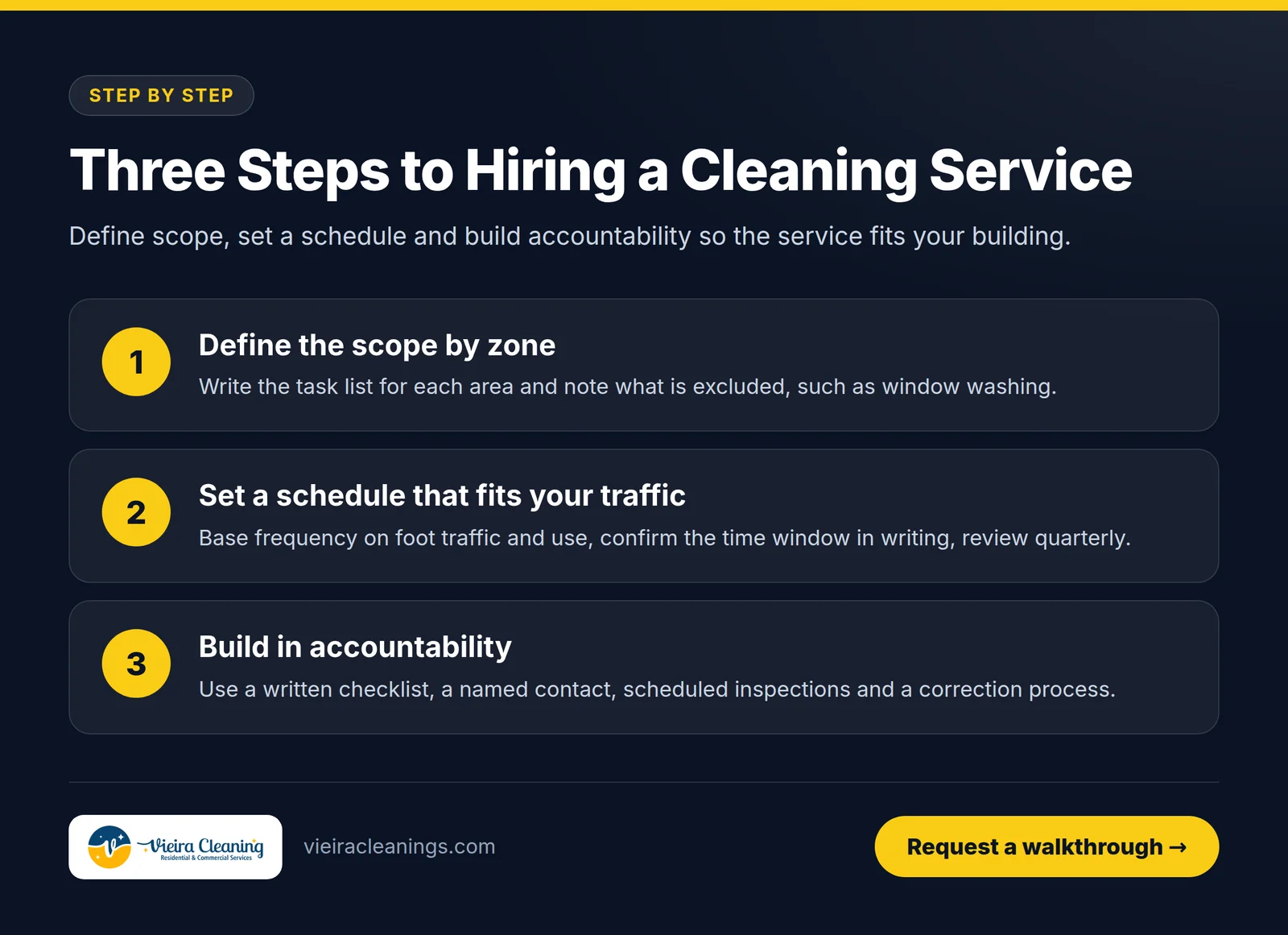
- Step 1: Define the scope by zone
- Step 2: Set a schedule that fits your traffic
- Step 3: Build in accountability
- Scope and schedule by facility type
- Common mistakes when hiring
- Questions to ask on the walkthrough
- Request a walkthrough this week
The real cost of inconsistent cleaning
Inconsistent cleaning rarely shows up as one big failure. It shows up as a restroom that is spotless on Monday and neglected by Thursday, or a break room counter that nobody owns. Customers notice before you do, and employees quietly lose pride in the space.
The cost is spread across several places. Staff spend paid time on chores that are not their job. Frequently touched surfaces like door handles, shared keyboards and faucets stay dirty longer. Floors wear faster when grit is left to grind into finishes. Turnover of cleaning vendors adds its own cost, because every new crew needs months to learn your building.
The Statista overview of the U.S. commercial cleaning industry notes that commercial cleaning can provide a healthier environment for employees and visitors and also helps make a good impression. Both of those outcomes depend on consistency, not on one great cleaning followed by weeks of drift.
A simple way to see the problem in your own building is to track it for two weeks. Note how many times someone on your team handles a cleaning task, how many complaints come up about restrooms or floors, and how often supplies run out. Even a rough tally usually shows that the hidden labor and frustration cost more than most owners expect, and it gives you concrete numbers to bring to any provider.
Step 1: Define the scope by zone
Scope is the written list of tasks for each area. Vague scopes like “clean the office” are where most disputes begin. Walk your space and divide it into zones, then assign tasks to each.
- Entry and reception: glass doors, floors, front desk surfaces, visitor seating.
- Work areas: trash removal, dusting, vacuuming or mopping, desk-edge wiping (clear desks only).
- Restrooms: fixtures, floors, dispensers, partitions, supplies restocked.
- Break rooms and kitchens: counters, sinks, microwave exteriors, tables, floors.
- Back-of-house: storage floors, loading areas, stairwells, utility corridors.
Then separate the routine tasks from the periodic ones. Routine tasks happen every visit. Periodic tasks, such as baseboards, vents you can reach, and detailed floor work, happen monthly or quarterly. When periodic work needs a heavier push, a one-time deep cleaning service can reset the building before routine upkeep resumes.
Also note what is excluded. If window washing, carpet extraction or appliance interiors are not in the scope, write that down so nobody assumes they are covered. Clear exclusions prevent surprise add-on charges and make it easier to price those extras separately when you actually need them.
Step 2: Set a schedule that fits your traffic
Frequency should follow foot traffic and use, not habit. A five-person accounting office and a busy storefront on Main Street in Turlock do not need the same plan, even at the same square footage.
Consider three timing questions. When is the building empty enough for crews to work without disruption? Which areas get dirty fastest, such as restrooms and entries? And are there days, like a Monday after a weekend event, when extra attention pays off?
Many Central Valley businesses choose after-hours service so floors dry and chemicals clear before staff arrive. Others prefer early morning. Pick the window that protects your workday, then confirm it in writing so the crew arrives at the same time each visit.
Seasonality matters here too. Dust from dry summers and tracked-in mud during wetter months change how quickly entries and floors degrade, so a plan that works in July may need an extra entry-mat or mopping pass in winter. Build in a quarterly check to adjust.
Step 3: Build in accountability
Accountability is what separates a cleaning contract from a cleaning relationship. Without it, a missed task becomes your problem to chase.
- A written checklist posted on site or shared digitally, so anyone can see what should have been done.
- A named point of contact who responds to issues quickly.
- Scheduled inspections where you and the provider walk the space together.
- A correction process that fixes a missed item promptly without a new argument each time.
Consistency also depends on training. A crew that follows a documented system will clean the same way on a rushed Friday as on a calm Tuesday. That is the idea behind structured corporate cleaning training and facility systems.
Scope and schedule by facility type
The table below shows how scope and timing typically shift. These are starting points to discuss, not fixed packages, and your walkthrough will refine them.
| Facility | Highest-priority areas | Typical timing to discuss |
|---|---|---|
| Small office | Restrooms, break room, entry, floors | After hours, a few visits per week |
| Retail store | Entry glass, sales floor, fitting or checkout areas | Before opening or after close, frequent visits |
| Medical or professional suite | Waiting room, restrooms, high-touch surfaces | After hours, regular visits tied to patient flow |
| Warehouse with office space | Office, restrooms, break area, walkways | Weekly or more, with periodic floor work |
| Gym or studio | Locker rooms, restrooms, floors, shared surfaces | Daily or near daily, off-peak hours |
If your building is mostly offices, the office cleaning service page outlines what a standard routine looks like.
Common mistakes when hiring
Mistake 1: Choosing on the quote line alone
Two quotes can look similar and cover very different work. Compare the task lists, visit frequency and supplies included before comparing totals. A lower number often means a thinner scope.
Mistake 2: Skipping the walkthrough
A quote built from a phone call cannot account for a second restroom, a tile lobby or a storage room that doubles as a break area. Always insist on seeing the space first.
Mistake 3: Never revisiting the plan
Businesses change. A new hire wave, added hours or a remodel shifts what the building needs. Review scope every quarter, and read more on this theme in our guide to outsourcing janitorial services in Turlock.
Questions to ask on the walkthrough
Use the walkthrough to test the provider, not just to receive a price. Ask who will actually clean your building and whether the crew stays consistent. Ask how missed items are reported and corrected, which supplies and equipment are included, and how the team handles keys, alarms and after-hours access. A confident provider answers these specifics without hesitation.
What does commercial cleaning include, and what does it cost?
Commercial cleaning typically includes trash removal, restroom sanitizing, floor care, dusting and surface wiping in common areas. Specialty work is usually scoped separately. Pricing varies by square footage, frequency, floor types and task list, so any honest provider will quote after seeing the building rather than naming an hourly figure over the phone.
When you compare providers, look for clear scope, consistent crews and responsive communication. Our cleaning blog has more on evaluating facility programs.
Frequently Asked Questions
How much does commercial cleaning cost per hour?
Hourly rates vary widely, and most providers quote by scope rather than by the hour. Square footage, visit frequency, floor types and restroom count all shape the total. The reliable way to get an accurate figure is an on-site walkthrough followed by a written scope, so you can compare like for like.
What is included in commercial cleaning?
A standard plan usually covers trash removal, restroom cleaning, floor care, dusting and wiping of common surfaces. Periodic tasks like baseboards or deeper floor work are often scheduled monthly or quarterly. Ask for a written task list so nothing is assumed, and request separate scoping for any one-time projects.
How do I choose the best commercial cleaning company in Turlock?
Look for a provider that offers an on-site walkthrough, a written scope, consistent crews and a clear correction process. Ask how they train staff and handle missed tasks. Local familiarity with Central Valley businesses helps, but documented systems matter more than any slogan or review count.
How often should an office be professionally cleaned?
It depends on occupancy and traffic. Small offices often do well with a few visits per week, while busy storefronts or clinics may need near daily service. Restrooms and entries get dirty fastest, so start there and adjust frequency after the first month of observation.
Request a walkthrough this week
Pick one day this week, list the five zones above, and note where your current cleaning falls short. That list becomes the agenda for a walkthrough, where Vieira Cleaning looks at your space, your hours and your traffic, then proposes a scope and schedule in writing. Request your Turlock walkthrough today.